I had just come off weeks of exhausting sourcing, interviewing, and coordinating technical rounds. Finally, I had two excellent profiles for a Senior Backend Developer position: highly qualified, motivated, aligned with the budget, and on top of that, a great cultural fit for the client. I submitted their profiles with that amazing feeling of a job well done. I had pitched the opportunity well to the candidates, and both were a great match for the project.
The next morning, a Slack notification popped up. It was the client: “Change of plans. To avoid delaying the product launch, we’re freezing the Backend position, and now I need a DevOps engineer urgently.” The process was back to square one.
Those of us who work in recruitment know this scenario by heart. We often say, almost as an inside joke, that our number one skill on our resume should be “frustration tolerance.”
But why does this happen so frequently? Is there anything we can do to try to anticipate these sudden pivots?
The “Threats” That Sabotage the Client Relationship
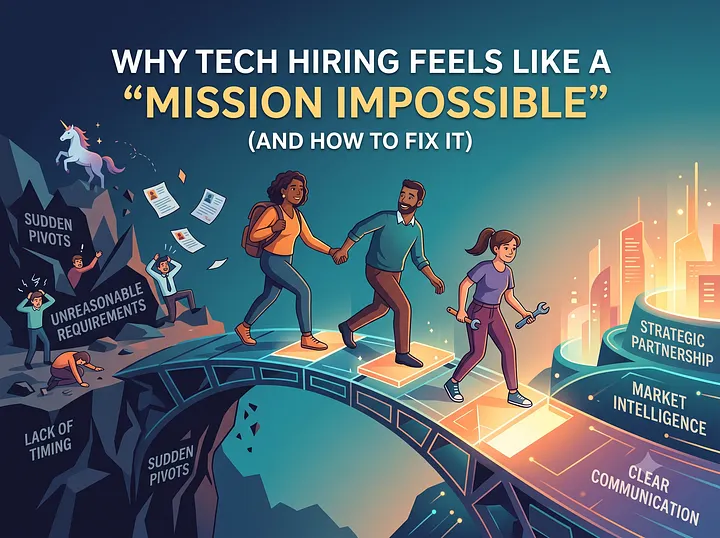
Tensions between recruiters and clients are common, and (besides the scenario mentioned above) they are usually fueled by three other major “threats”:
- Chasing the “Unicorn”: The requested profile accumulates so many different skills that the search becomes a literal mission impossible. This is what we recruiters call “the unicorn”, the requirements don’t belong to a single profile; they are looking for multiple roles wrapped into one person.
- Lack of Visibility: Finding qualified professionals has its hurdles, but the real danger is the lack of reporting on progress and the challenges that arise during a search. If the client doesn’t know what’s happening behind the scenes, what roadblocks we are hitting, or what feedback we are getting from the market, it creates the feeling that no work is being done.
- Timing: In this market, time isn’t just money: time is candidates evaporating. A lack of agility in giving feedback or scheduling interviews translates, without exception, into losing top talent to the competition.
The client knows their business and we know the market. What if, instead of acting as outsiders, we start moving as a team?
From Vendors to Strategic Partners
To anticipate those sudden “pivots” at the beginning, a recruiter can no longer position themselves as just a service provider. They must add value by becoming a strategic business ally:
1. The Intake Meeting: The Art of Listening
The recruitment process shouldn’t start with a checklist of technical requirements. A successful recruitment process must start with empathy.
At White Prompt, we have a specialized team that handles this initial conversation with the client. We sit down with them to learn what they want to build and what their concerns are. We seek to understand how their team is structured and what their culture is like. We dig into the pain points they are currently facing. We ask about their past experiences with other vendors, what worked for them, what did not, and why.
We actively listen to what they have to say to get to the heart of their business and understand how we can position ourselves as catalysts for their growth.
2. Market Intelligence
If we go to the doctor with chest pain, we don’t expect the professional to say, “Well… honestly, being sick is tough.” We expect an accurate diagnosis and a path forward.
The same goes for recruitment. Telling a client that “the market is tough” adds zero value.
Our role is to provide clarity on where we stand: “The search is taking longer than expected because, with these X requirements, the candidate pool is very limited. If we flex on this X requirement, the candidate pool will grow significantly, and we’ll be able to land a great candidate in just a few days.”
With the cards on the table, leaders have a better understanding of the landscape to make the best possible decisions for their business.
3. Facilitating Communication
The tech market moves at a lightning-fast pace, and when communication drags, losing candidates becomes systemic. A 48-hour delay in a response can cost the success of the entire search.
That is why establishing communication channels beforehand and setting proper response times protects the health of the process. The recruiter commits to providing visibility on their progress, and the client commits to providing feedback within the agreed-upon timelines.
Strategies that we have implemented successfully at White Prompt involve tailoring our approach to each client’s routine. This can range from launching a custom dashboard to track candidates to opening a dedicated channel on their daily chat platform to keep communication easy and agile.
The True Differentiator
If you’ve made it this far, you’ve probably noticed the common thread in all of this: the human touch.
Unexpected twists will always exist. Projects will change direction, budgets will suddenly freeze, and priorities will be restructured overnight. It’s part of the fast-paced nature of our industry. What we can change is how we navigate those moments.
At White Prompt, we strive to face adversities with empathy, genuinely connecting with people. We are a tech company, but we hold an unwavering conviction: the true differentiator happens when technology is empowered by human sensitivity.
What about you? What has been your biggest challenge so far in your recruitment process? Have you ever had to hunt for a “unicorn”?