The era of the “human typewriter” is officially over.
If you’ve been following the industry news this March, the signal is deafening: OpenClaw’s core team moving to OpenAI wasn’t just a talent acquisition — it was the white flag for manual coding. We are no longer transitioning into the age of AI-assisted coding; we are already living in the age of Autonomous Execution.
But here’s the uncomfortable truth that most “AI influencers” won’t tell you: An autonomous agent without a rigorous specification is just a faster way to build technical debt.
At White Prompt, we’ve realized that the most valuable person in the room is no longer the one who can write the cleanest syntax. It’s the one who can architect the most precise Spec.
The OpenClaw Paradox: Speed vs. Control
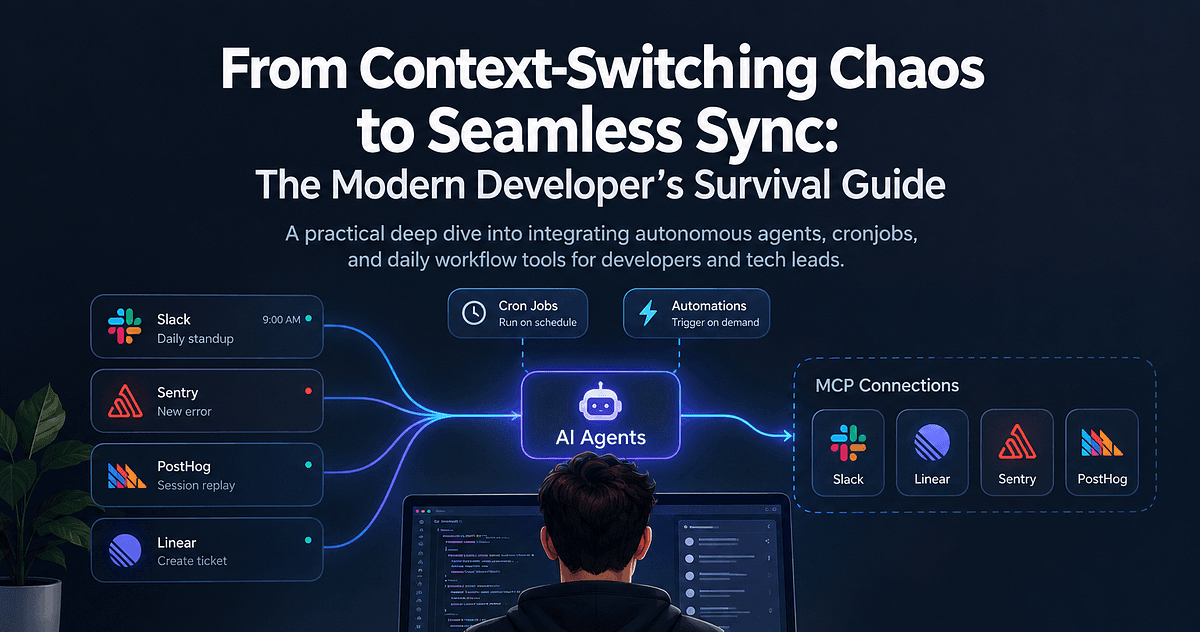
Tools like OpenClaw, Microsoft AutoGen, and the latest Claude “Computer Use” iterations have turned the developer’s keyboard into a conductor’s baton. These agents can navigate your file system, write tests, and deploy hotfixes while you’re grabbing coffee.
However, they suffer from what I call the “Autopilot Hallucination”: without a rigid framework, they optimize for completion, not correctness.
If you give an autonomous agent a vague prompt, you get a “hallucinated architecture.” If you give it a High-Fidelity Specification, you get a production-ready system. This is where Spec-Driven Development (SDD) changes the game.
Why SDD is the New “Seniority”
In 2024, “Prompt Engineering” was the buzzword. In 2026, it’s a hobby. Real engineering in the age of agents requires Spec-Driven Development.
Here is how the role of the Senior Developer has evolved:
- The Old Way (Implementation-First): You spend 4 hours writing logic, 2 hours debugging, and 1 hour documenting.
- The White Prompt Way (Spec-First): You spend 5 hours defining the “source of truth” — the Spec. You define API contracts, edge cases, state transitions, and security constraints in a machine-readable format.
Then, you let the agent (be it OpenClaw or a custom orchestrator) do the “heavy lifting” of writing the boilerplate. Your job isn’t to fix the code; your job is to refine the Spec until the code is perfect.
The “SaaSpocalypse” and Why Methods Matter More Than Tools
We are witnessing a “SaaSpocalypse.” As autonomous agents like OpenClaw become capable of navigating interfaces and executing complex workflows, the traditional “per-seat” pricing model of software is crumbling. If an agent can manage your Jira, GitHub, and Slack integrations simultaneously, why do you need ten different subscriptions?
But in this race to automate everything, many companies are making a fatal mistake: they are falling in love with the tools, not the method.
OpenClaw is a powerful engine, but it’s just an engine. If you don’t have a steering wheel — a rigorous methodology — you’re just accelerating toward a cliff. Tools will change every month. Today it’s OpenClaw; tomorrow it will be an OpenAI-native “Operator” or a new Anthropic breakthrough.
At White Prompt, we don’t bet on the tool of the week. We bet on the architecture. Because while tools are ephemeral, Spec-Driven Development is the framework that ensures your software remains maintainable, scalable, and — most importantly — profitable.
Under the Hood: How We Implement SDD at White Prompt
How does this look in practice? When a client comes to us with a complex challenge, we don’t start by opening an IDE. We start by building the High-Fidelity Specification.
Our SDD workflow follows a strict three-pillar approach:
- The Source of Truth (The Spec): We define the system’s behavior using machine-readable schemas, API contracts, and state transition diagrams. This isn’t a vague “README”; it’s a technical blueprint that leaves zero room for AI interpretation.
- The Guardrail Execution: We feed this spec into agents like OpenClaw. But instead of saying “build this,” we say “Implement this logic only within these constraints.” The agent becomes a high-speed laborer, while the developer remains the Architect of Records.
- The Validation Loop: If the agent fails a test or halluncinates a feature, we don’t go into the code to “patch” it. We go back to the Spec. We refine the requirements, and the agent regenerates the solution. This ensures that the documentation and the code are always in 100% sync.
This approach eliminates the “black box” problem of AI coding. It gives our clients the speed of AI with the predictability of traditional engineering.
Conclusion: Don’t Be Replaced — Be the Architect
The fear that “AI will take our jobs” is half-true. AI will take the jobs of those who only know how to translate requirements into syntax. But for the engineers who can think in systems, who can design complex architectures, and who can master Spec-Driven Development, this is the greatest era in history.
The transition from Coder to Orchestrator isn’t just a career move; it’s a survival strategy.
At White Prompt, we aren’t just using AI to write code faster. We are using it to build better systems through superior methodology. The keyboard is becoming optional — the Spec is becoming everything.
Are you ready to stop typing and start orchestrating? Let’s build the future, one specification at a time.